14 Jun 2026
Ledger Transparency Revealing Claim Behaviors in Blockchain-Based Reward Platforms
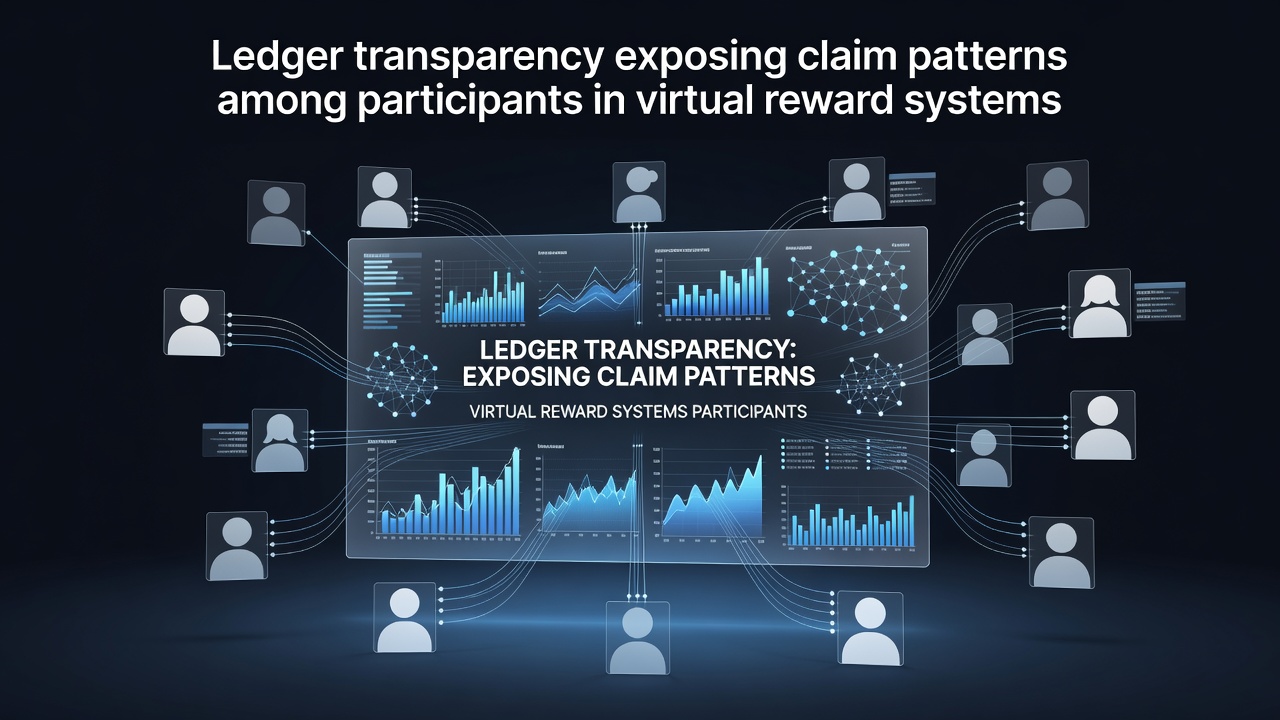
Blockchain technology underpins many virtual reward systems today, where distributed ledgers record every claim, transfer, and redemption in immutable sequences that anyone can audit. These records allow observers to identify recurring behaviors among participants, such as clusters of claims occurring within narrow time windows or repeated requests from single wallet addresses that exceed typical usage thresholds. According to data compiled by the European Commission on digital innovation, such patterns emerged clearly in several European pilot programs for supply-chain incentive tokens during 2025.
Understanding Ledger Mechanics in Reward Distribution
Virtual reward systems operate through smart contracts that trigger automatic distributions once predefined conditions are met, and every interaction leaves a timestamped entry on the public chain. Participants submit claims by interacting with these contracts, after which the ledger logs the originating address, the reward amount, and any associated metadata like gas fees or linked identities. Researchers at the University of Toronto's blockchain lab documented how analysts scan these entries to detect coordinated activity, including multiple addresses submitting identical claim sequences within seconds of each other.
Transparency stems directly from the design of networks such as Ethereum and newer layer-two solutions that publish all transactions for verification. This setup contrasts with traditional centralized databases where claim logs remain accessible only to system operators. Data from the Monetary Authority of Singapore's 2025 fintech review showed that public visibility reduced discrepancies in reward allocation by exposing duplicate submissions before they could be processed multiple times.
Observed Claim Patterns Across Platforms
Analysts examining ledger data have noted several consistent behaviors. One pattern involves participants spacing claims across multiple addresses to stay below automated detection thresholds, a tactic visible when transaction graphs reveal interconnected wallets funded from the same source address shortly before reward events. Another pattern appears in timing correlations, where large volumes of claims cluster immediately after scheduled reward drops, suggesting automated scripts rather than manual human interaction.
Studies released in June 2026 by the Australian Securities and Investments Commission highlighted how reward programs tied to digital content platforms displayed geographic clustering, with claims originating from specific IP-linked regions showing higher redemption rates during off-peak hours. These findings emerged from cross-referencing on-chain data with publicly available network statistics, allowing regulators to map participation density without accessing private user information.

Analytical Tools Driving Pattern Detection
Specialized software now processes ledger exports to generate visual maps of claim flows, highlighting nodes with unusually high connectivity or repetitive value transfers. Industry reports from the Blockchain Research Institute in Canada detail how graph-analysis algorithms flag addresses that receive rewards and immediately forward portions to secondary wallets, a sequence that repeats across different reward events. Such tools operate on open data, enabling independent verification by academic teams or oversight bodies without requiring platform cooperation.
Patterns also surface in value distribution, where certain participants consistently claim maximum allowable rewards while others claim smaller amounts more frequently. The European Commission's June 2026 update on digital asset oversight noted that these distributions often align with wallet age, with older addresses showing steadier claim histories compared to newer entrants who exhibit burst activity followed by dormancy.
Regulatory Responses to Increased Visibility
Public ledgers have prompted several jurisdictions to adjust compliance frameworks around virtual reward programs. Singapore's authority incorporated on-chain monitoring requirements into its 2026 guidelines for token-based incentive schemes, requiring operators to maintain records that match published ledger entries. Similar steps appeared in draft rules from Canada's financial regulators, which reference transaction pattern analysis as a standard audit procedure for programs exceeding defined participation thresholds.
Academic papers published through the University of Melbourne's Centre for Digital Transformation examined how ledger transparency affects participant strategies, finding that awareness of public scrutiny correlates with shifts toward more distributed claiming methods. These papers draw on datasets spanning multiple reward platforms active between 2024 and 2026, providing quantitative measures of address diversification over time.
Conclusion
Ledger transparency continues to reshape how claim activity is understood in virtual reward systems by converting private interactions into verifiable sequences that reveal timing clusters, address networks, and value distributions. Reports from bodies such as the Monetary Authority of Singapore and the Australian Securities and Investments Commission demonstrate practical applications of this visibility in regulatory monitoring. As analytical methods advance, the same open records that expose patterns also support more precise oversight across regions, creating a shared factual basis for evaluating participant behavior in these digital environments.