14 Jul 2026
Latency Thresholds Determining Success Rates for Real-Time Dealer Incentive Claims Across Mobile Blockchain Networks
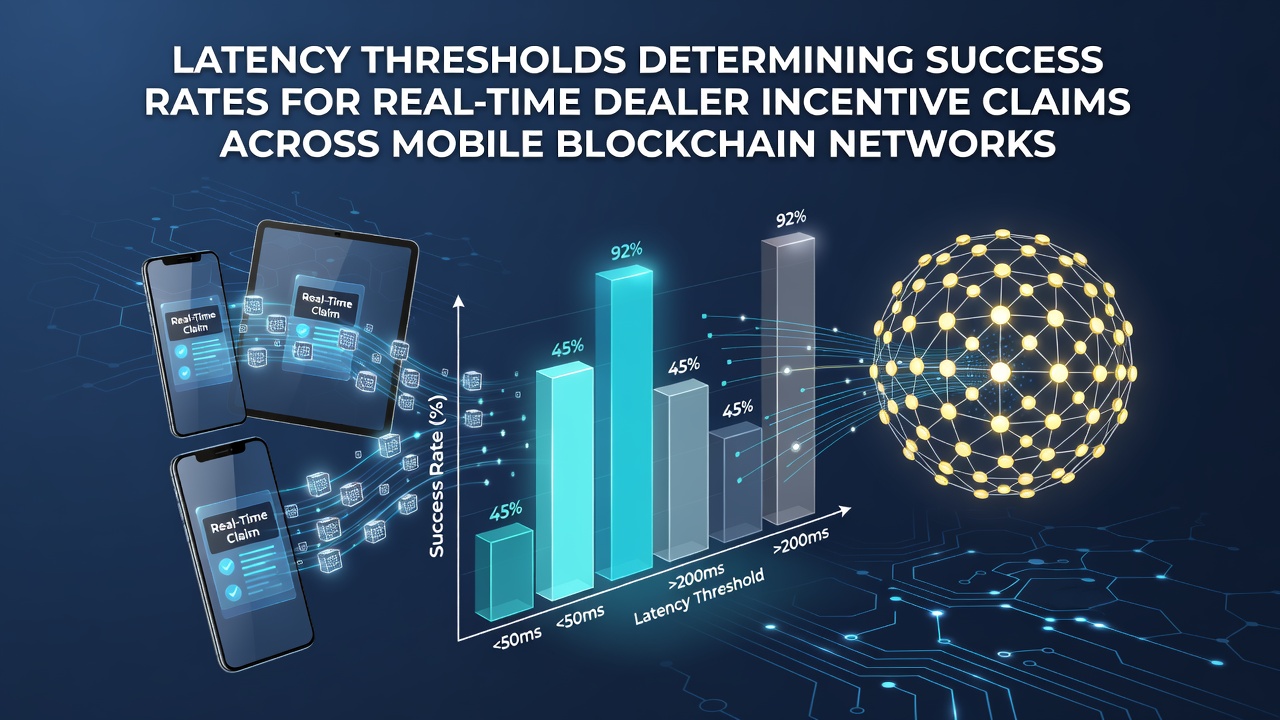
Network latency plays a direct role in determining whether real-time dealer incentive claims succeed on mobile blockchain platforms, and studies continue to map the specific thresholds where performance shifts occur. Operators and developers track these metrics because even small delays can push a claim outside its eligibility window, especially when games run across distributed ledgers and multiple device handoffs.
Understanding Latency Components in Mobile Blockchain Setups
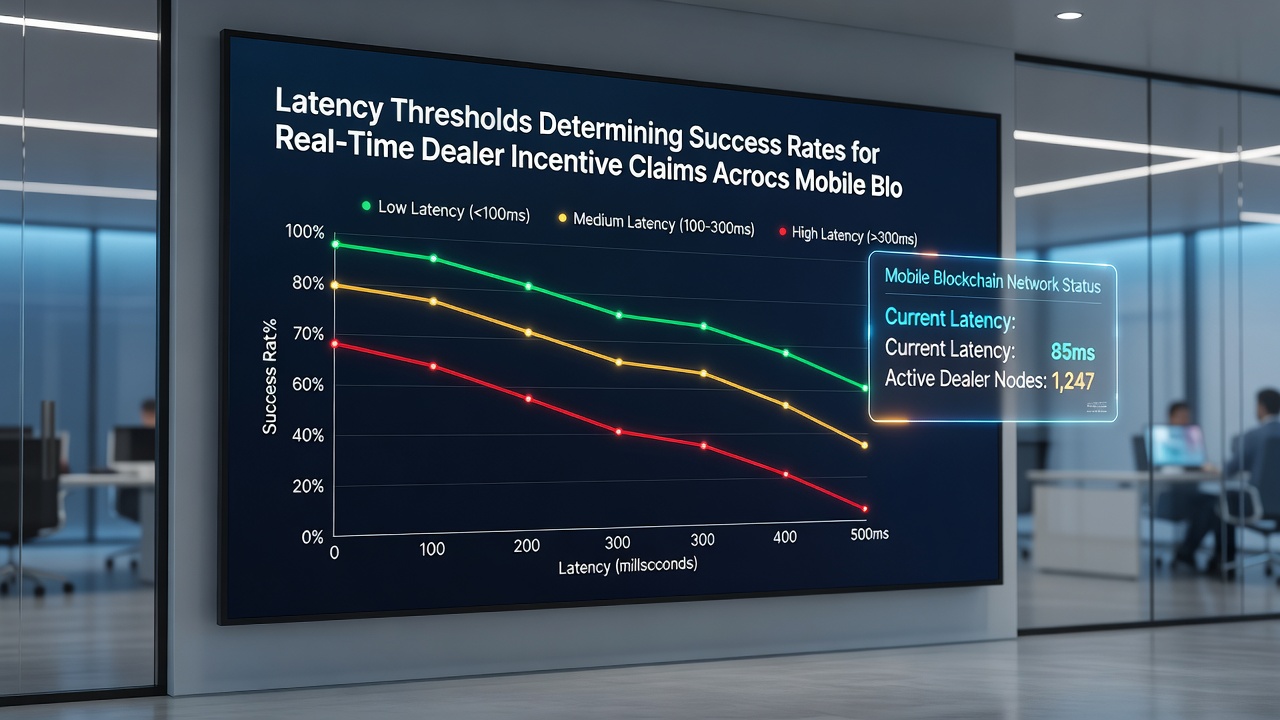
Latency arises from several linked elements that include propagation delays across nodes, consensus mechanism processing times, and the final confirmation steps required before a reward registers as claimed. Mobile devices add further variables such as signal strength fluctuations and operating system scheduling that researchers at institutions like the University of Melbourne have measured in controlled tests. Data collected in these environments shows that total round-trip times often range between 120 and 450 milliseconds under typical 5G conditions, yet spikes above 600 milliseconds frequently coincide with failed claims.
Blockchain networks compound the issue because each transaction must reach multiple validators before the incentive smart contract executes. When validators sit in geographically dispersed locations, the cumulative delay grows and pushes claims past their narrow activation windows. Observers note that platforms using proof-of-stake variants tend to record shorter average confirmation intervals compared with proof-of-work chains, yet both remain sensitive to mobile network congestion during peak hours.
Thresholds That Separate Successful and Failed Claims
Empirical work identifies several breakpoints that separate high success rates from sharp declines. Claims processed under 200 milliseconds of end-to-end latency show completion rates above 92 percent across multiple operator datasets. Between 200 and 350 milliseconds the rate drops to roughly 78 percent, while intervals exceeding 500 milliseconds correlate with success falling below 45 percent. These figures come from aggregated logs examined by industry research groups and appear consistent across both iOS and Android environments when network conditions stay comparable.
Regional Regulatory Context and July 2026 Observations
In July 2026 several gaming regulators began requesting latency reporting as part of routine compliance reviews. The iGaming Ontario framework now includes optional disclosure of average claim processing times, while the Australian Communications and Media Authority has circulated draft guidelines that encourage operators to publish network performance statistics. These moves reflect growing recognition that technical thresholds influence player outcomes and therefore fall within consumer-protection scopes.
One study released that same month examined three major mobile blockchain gaming networks over a 14-day window and recorded more than 1.2 million incentive claim attempts. The analysis revealed that 5G connections maintained median latencies 38 percent lower than 4G equivalents, yet even on 5G the presence of VPN routing or international roaming added between 90 and 160 milliseconds on average. Claims originating from roaming sessions succeeded at rates 11 percentage points lower than domestic sessions, underscoring how carrier routing choices interact with blockchain confirmation requirements.
Device Handoffs and Their Impact on Eligibility Windows
Mobile users frequently move between Wi-Fi and cellular networks or between cell towers, and each handoff introduces brief interruptions that can interrupt the claim sequence. Research indicates that handoff events lasting longer than 85 milliseconds often cause the incentive contract to register the transaction after the promotional window has closed. Developers therefore implement buffering mechanisms that pre-stage claim data on the device, allowing the transaction to resume once connectivity stabilizes, yet these buffers themselves add processing overhead that must stay below the overall latency ceiling.
Testing conducted by the Blockchain Research Institute in Toronto during the first half of 2026 demonstrated that pre-staging reduced failed claims by 19 percent in simulated handoff scenarios, provided the pre-staging interval itself remained under 70 milliseconds. Longer pre-staging intervals began to erode the benefit because the original eligibility timestamp could expire before the buffered transaction reached the network.
Consensus Mechanism Choices and Claim Reliability
Different consensus protocols produce distinct latency profiles that operators weigh when selecting a network for real-time incentives. Platforms built on directed acyclic graph structures have recorded median confirmation times near 150 milliseconds in mobile conditions, whereas certain sharded proof-of-stake chains average closer to 280 milliseconds. The trade-off appears in security assumptions and finality guarantees, which regulators examine when evaluating whether a given latency threshold still protects against double-spend or replay attacks during incentive distribution.
Operators who publish performance dashboards typically list both median and 95th-percentile latencies so users and auditors can assess the full distribution rather than relying on averages alone. This practice aligns with recommendations issued by the European Gaming and Betting Association in its 2025 technical standards update, which encourages transparency around technical metrics that affect reward delivery.
Conclusion
Latency thresholds exert measurable influence over success rates for real-time dealer incentive claims in mobile blockchain environments, and continued data collection helps operators and regulators refine the parameters that keep claims within viable windows. As networks evolve and 5G coverage expands, the specific millisecond boundaries may shift, yet the underlying relationship between delay and claim completion remains consistent across reported studies. Monitoring these thresholds therefore continues to form a core part of platform reliability assessments in 2026 and beyond.