26 May 2026
Indonesia Blocks Polymarket Access After Platform Offers Contracts on President Prabowo Subianto

Indonesia’s Ministry of Communication and Digital Affairs has blocked access to the prediction market platform Polymarket, and officials classified the service as illegal online gambling under existing national rules. The decision came after the platform began offering trading contracts tied to the political future and longevity of President Prabowo Subianto, including markets that priced low odds for his removal from office by the end of the calendar year.
Authorities acted quickly once those specific contracts appeared, and the ministry directed internet service providers to restrict user access across the country. This move forms part of a sustained campaign against online gambling operations that has continued through early 2026 and remains active as of May 2026.
Details of the Block and the Triggering Contracts
Polymarket allows users to trade shares in event outcomes using cryptocurrency, and the platform introduced several contracts focused on Indonesian political developments. One contract asked traders to bet on whether President Prabowo Subianto would leave office before December 31, with market pricing indicating low probabilities for that scenario. Indonesian regulators viewed these offerings as unauthorized betting on political events, which falls under prohibitions against online gambling activities.
The Ministry of Communication and Digital Affairs issued the access restrictions without prior public warning, and multiple internet providers confirmed compliance within days of receiving the directive. Users attempting to reach the site now encounter blocking messages that cite violations of gambling laws. Data from network monitoring groups shows the restrictions took effect uniformly across major provinces.
Broader Enforcement Context in Indonesia
Indonesia maintains strict national laws against online gambling, and the current administration has prioritized enforcement in recent years. The country ranks as the world’s fourth-most populous nation, which means regulatory actions affect a large user base. Officials have targeted various offshore platforms that offer betting services to Indonesian residents, and the Polymarket action follows similar blocks imposed on other prediction and casino-style sites.
According to records maintained by the Ministry of Communication and Digital Affairs, authorities processed hundreds of blocking requests related to gambling domains in the first quarter of 2026 alone. These efforts align with presidential directives aimed at reducing illegal online betting and protecting financial systems from associated risks. Industry reports indicate that enforcement teams coordinate regularly with telecommunications companies to maintain compliance lists.
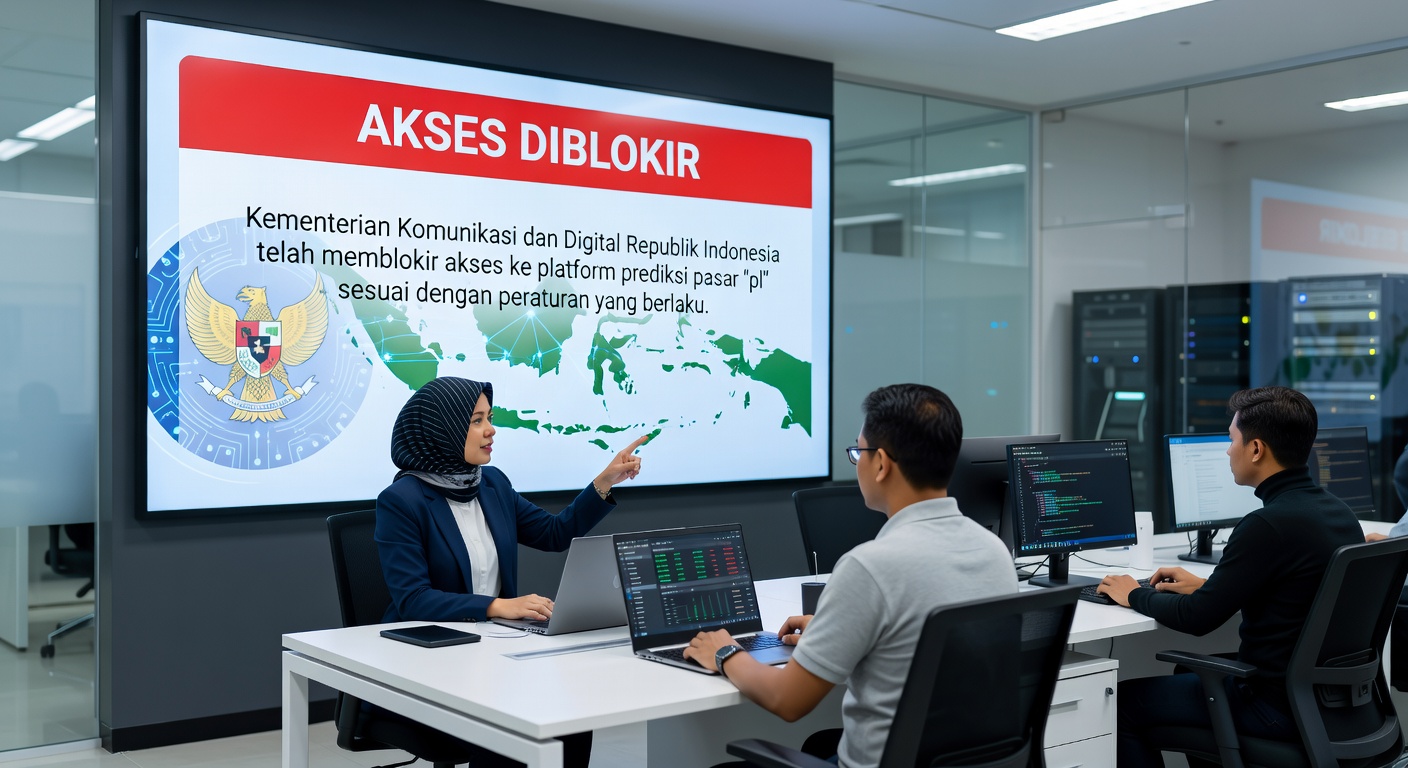
Political betting contracts have drawn particular scrutiny because they involve events tied to government stability. Regulators determined that allowing trading on the tenure of elected officials constitutes a form of wagering prohibited under Indonesian statutes. The ministry’s statement emphasized that platforms offering such contracts operate outside legal frameworks for financial or gaming activities.
Technical Implementation and User Impact
Internet service providers implemented the block through domain name system restrictions and IP address filtering, and these methods prevent most direct connections from within Indonesia. Some users reported attempts to circumvent the restrictions using virtual private networks, yet authorities have also moved against VPN services that facilitate access to blocked gambling content. Network data collected in May 2026 shows a measurable drop in traffic to Polymarket from Indonesian IP addresses following the action.
The platform itself remains accessible from locations outside Indonesia, and Polymarket has not issued a formal public response regarding the specific Indonesian restrictions. Contract volumes on the affected political markets stayed low before the block took effect, according to publicly available trading records.
Regulatory Framework and International Comparisons
Indonesia’s approach draws from existing legislation that treats online gambling as a criminal activity subject to fines adn imprisonment. The Ministry of Communication and Digital Affairs holds authority to order blocks on websites deemed non-compliant, and this power extends to platforms hosted overseas when they serve local users. Observers note that similar regulatory models exist in other Southeast Asian nations where governments balance digital access with public policy goals.
Research from academic institutions in the Asia-Pacific region, including studies compiled by the Australian Gambling Research Centre, has examined how prediction markets intersect with traditional gambling definitions. Those analyses highlight differences in regulatory treatment across jurisdictions, yet Indonesia’s position remains consistent with its long-standing prohibition on such activities.
Conclusion
The block on Polymarket reflects Indonesia’s ongoing commitment to enforcing national gambling laws in the digital space. Officials targeted the platform after contracts appeared on President Prabowo Subianto’s political future, and the action integrates into wider efforts that continued through May 2026. Internet providers carried out the restrictions efficiently, and the ministry continues to monitor related platforms for compliance. This case illustrates how regulators address specific offerings that cross established legal boundaries while maintaining broader controls on online betting services.