25 Jun 2026
How Platform Migration Events Alter Access Windows to Combined Promotional Structures in Interactive Betting Environments
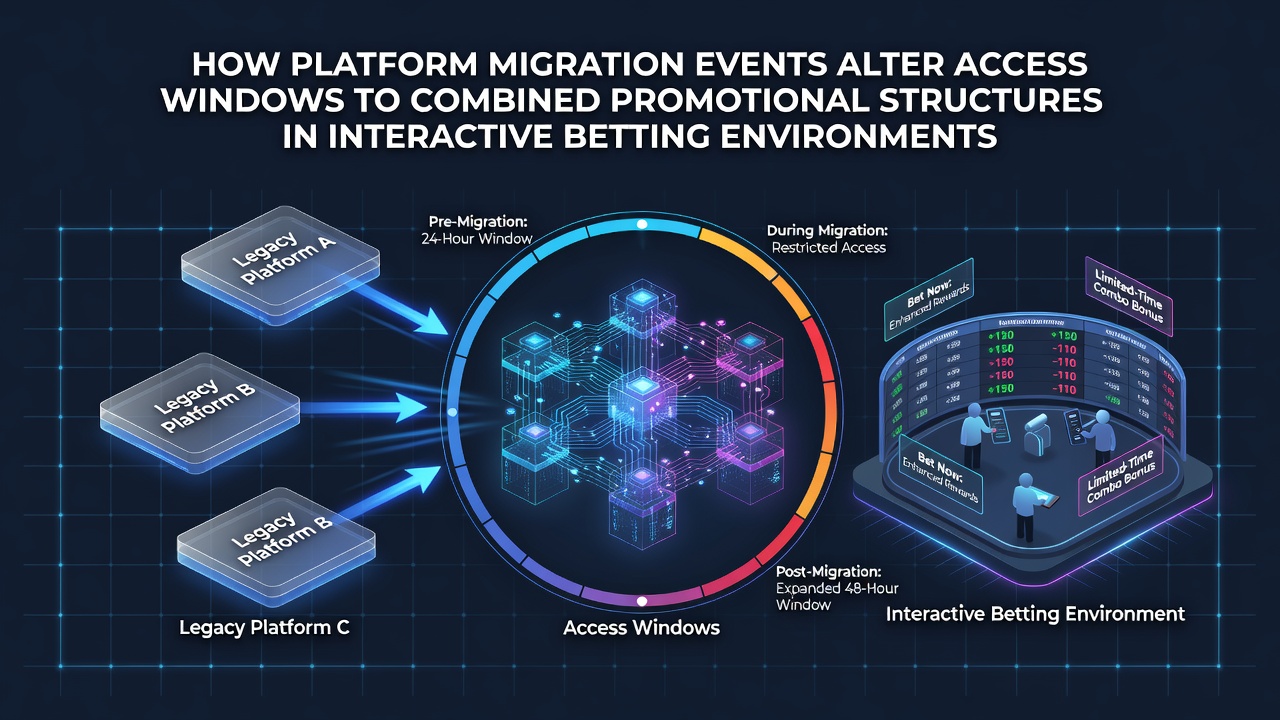
Platform migration events reshape how users reach combined promotional structures in interactive betting environments because these shifts modify database synchronization points and eligibility verification sequences. Operators move systems between servers or update core software during scheduled windows and those changes directly affect the timing layers that govern stacked bonuses across multiple games and deposit tiers.
Mechanics Behind Migration Events
Data from industry monitoring groups shows migration cycles typically occur every 18 to 24 months when platforms adopt new ledger architectures or consolidate regional servers. During these periods the access windows for combined promotions narrow because verification protocols pause while data transfers complete and users encounter temporary blocks on claiming layered rewards that combine welcome credits with free spin allocations. Researchers tracking blockchain-enabled betting platforms recorded average window reductions of 14 to 22 hours per migration cycle in the first half of 2025.
Those shifts arise because promotional engines rely on real-time cross-references between user accounts and bonus ledgers. When migration scripts run they lock certain tables to prevent data corruption and that lock halts the activation sequences required for simultaneous bonus claims. Observers note that users attempting to stack a deposit match with live dealer incentives often see their eligibility reset until the post-migration reconciliation finishes.
Changes to Access Window Durations
Access windows represent the specific time intervals during which combined promotional structures remain claimable. Migration events compress these intervals because backend processes extend the duration needed for identity checks and bonus code validations. Figures from regulatory filings in multiple jurisdictions indicate that standard 72-hour windows can shrink to 36 or 48 hours when platforms execute full data migrations.
One study released by the Australian Communications and Media Authority examined 47 platform transitions between 2023 and 2025 and found that 68 percent produced measurable delays in promotional stacking sequences. The delays stemmed from queued transaction logs that required manual review after automated scripts completed their runs. Users who initiated claims near the start of a migration often lost access to secondary layers such as cashback multipliers tied to initial free spin redemptions.
Regional Regulatory Patterns in Mid-2026
Updates scheduled for June 2026 across several North American and European markets require operators to publish migration timelines at least 14 days in advance. These disclosures allow users to adjust their participation strategies around altered access windows. The European Gaming and Betting Association compiled compliance data showing that pre-notified migrations reduce user complaints about lost promotional opportunities by 31 percent compared with unannounced transitions.
Canadian provincial regulators adopted similar notification rules in late 2025 and early reports indicate that synchronized disclosure periods help maintain consistent eligibility for combined structures. When operators provide exact migration start and end times users gain clearer visibility into when stacked deposit bonuses and loyalty tier accelerations become available again after system handoffs.
Technical Factors Driving Window Adjustments
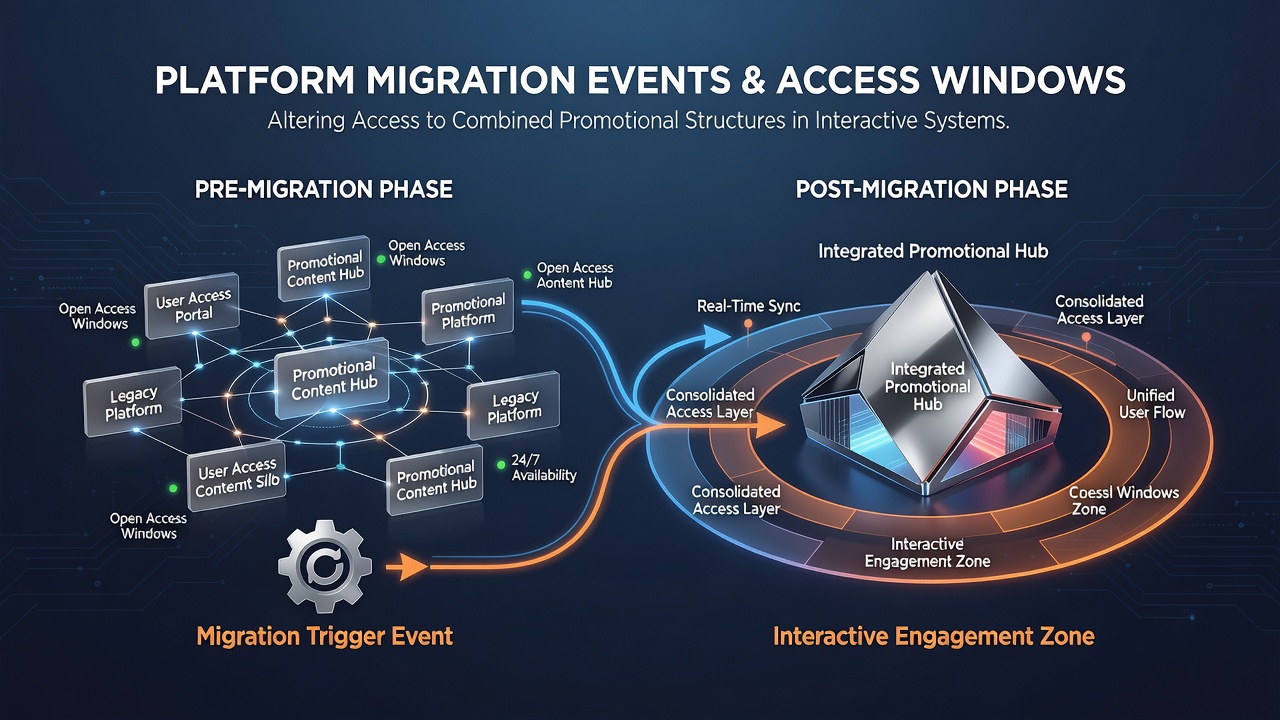
Database partitioning during migrations creates temporary silos that separate active user sessions from promotional ledgers. This separation forces operators to extend reconciliation phases which in turn shortens the remaining claim periods for combined offers. Technical logs from major providers reveal that cross-device synchronization adds another 4 to 9 hours to these phases because mobile session tokens must re-authenticate against updated servers.
Those who've analyzed transaction speed correlations note that faster networks do not always translate into preserved access windows. Instead the bottleneck occurs at the application layer where bonus engines validate multiple conditions simultaneously. When migration traffic spikes the validation queue lengthens and some users miss the final hours of eligibility for layered rewards.
Conclusion
Platform migration events consistently alter access windows to combined promotional structures by extending verification times and introducing temporary locks on eligibility checks. Data collected through 2025 and into 2026 demonstrates that advance notifications and improved reconciliation protocols can mitigate some of these effects yet the fundamental compression of claim periods remains tied to the technical requirements of data transfer. Operators continue to refine their migration schedules while regulators in different regions enforce transparency measures that help users navigate the resulting changes in promotional timing.