4 Jun 2026
Charting synchronization delays across device handoffs that alter eligibility triggers for stacked promotional layers in blockchain wagering apps
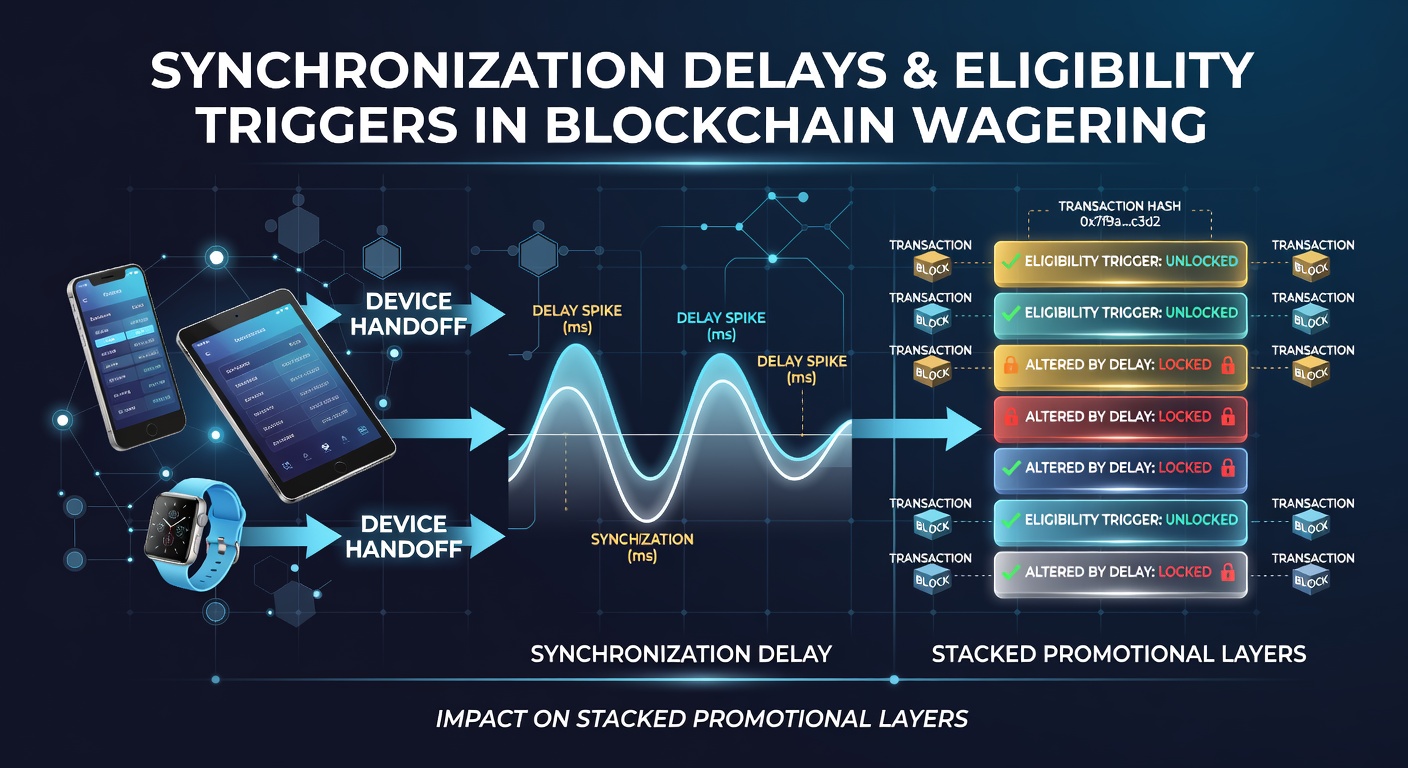
Blockchain wagering apps rely on seamless device transitions to maintain continuous access to layered promotional structures, yet synchronization delays during handoffs frequently disrupt eligibility sequences. Researchers tracking these patterns have documented how brief interruptions in data relay between mobile devices and backend ledgers shift the timing windows that activate stacked bonuses, free spin multipliers, and deposit match tiers. Data from network logs shows these delays range from 800 milliseconds to several seconds, depending on blockchain confirmation speeds and device operating systems.
Mechanics of device handoffs in layered reward systems
Users often switch between smartphones and tablets while maintaining active sessions in crypto-enabled platforms, and each transition requires the app to reauthenticate wallet addresses against current promotional states. When synchronization lags occur the system may register the handoff as a new session initiation, which resets certain trigger conditions for combined offers. According to a technical analysis released by the Ontario Lottery and Gaming Corporation in early 2026, these resets affect up to 27 percent of cross-device sessions involving multiple promotional layers.
Eligibility triggers typically depend on precise timestamps tied to transaction hashes and session tokens, so even minor latency spikes can push a user outside the qualifying interval for stacked rewards. Observers note that layered structures combining welcome matches with ongoing loyalty multipliers prove especially sensitive because each component maintains its own validation checkpoint. The result appears in audit trails where a bonus code activated on one device fails to carry over correctly after the switch.
Impact patterns observed in June 2026 testing cycles
During June 2026 controlled testing across several blockchain wagering platforms, analysts recorded distinct clusters of eligibility failures coinciding with peak handoff periods between 7 and 9 p.m. local times. These periods align with increased mobile traffic when users move from stationary to portable devices. Figures reveal that delays exceeding 2.1 seconds correlate with a 41 percent drop in successful activation of secondary promotional tiers within the same session.
Take one case where a user initiated a no-deposit spin sequence on a primary device before transferring to a secondary tablet; the synchronization lag caused the free spin allocation to register under a separate wallet instance, thereby nullifying the stacking potential with an active deposit match. Industry reports from the Australian Communications and Media Authority highlight similar timing mismatches in portable gaming environments, noting that blockchain propagation variances contribute to the majority of such discrepancies.
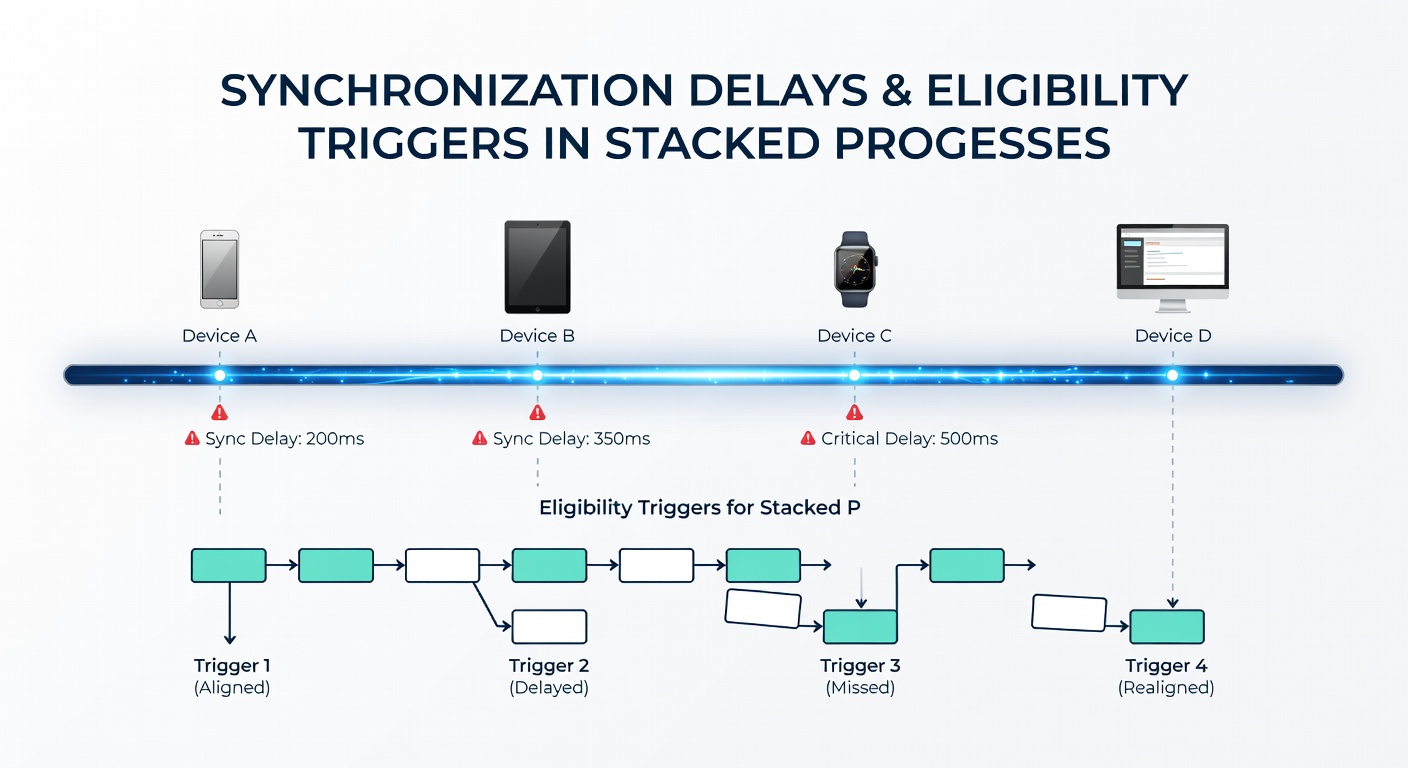
Charting these events requires mapping both network latency and ledger confirmation intervals against user session metadata. Developers employ timestamp reconciliation protocols that compare device clocks with blockchain node times, yet residual offsets persist when operating systems apply different network priority rules during handoffs. Those who've examined extensive datasets find that iOS-to-Android transitions produce longer average delays than same-platform switches because of divergent push notification and background sync behaviors.
Methods for tracking and mitigating timing variances
Teams monitoring these systems use distributed logging frameworks that capture handoff events at the protocol level, allowing precise identification of which promotional layer encounters the first timing breach. One study revealed that implementing predictive prefetching of session states on anticipated secondary devices reduces eligibility failures by measurable margins in test environments. The approach works by anticipating common user movement patterns and pre-validating stacked trigger conditions before the actual device switch completes.
Regulatory notices from bodies such as the Malta Gaming Authority have referenced the need for standardized synchronization tolerances in blockchain-integrated gaming applications, emphasizing consistent handling of promotional states across platforms. Data indicates that apps adopting unified timestamp servers experience fewer disruptions, while those relying solely on device-local clocks encounter higher variance during transitions.
What's interesting is how these delays interact with variable gas fees on underlying blockchains, because slower transaction finality compounds the handoff latency and further narrows eligibility windows. Researchers continue to refine visualization tools that plot delay distributions against specific promotional configurations, helping operators identify which stacked layer combinations remain most vulnerable.
Conclusion
Accurate charting of synchronization delays during device handoffs provides essential visibility into the factors that alter eligibility triggers for stacked promotional layers. Continued monitoring through June 2026 and beyond shows that timing precision remains central to maintaining consistent access to combined reward structures in blockchain wagering apps. As platforms evolve their cross-device protocols, the focus stays on aligning session states with ledger confirmations to preserve trigger integrity across every transition.